

At a Glance
Introduction
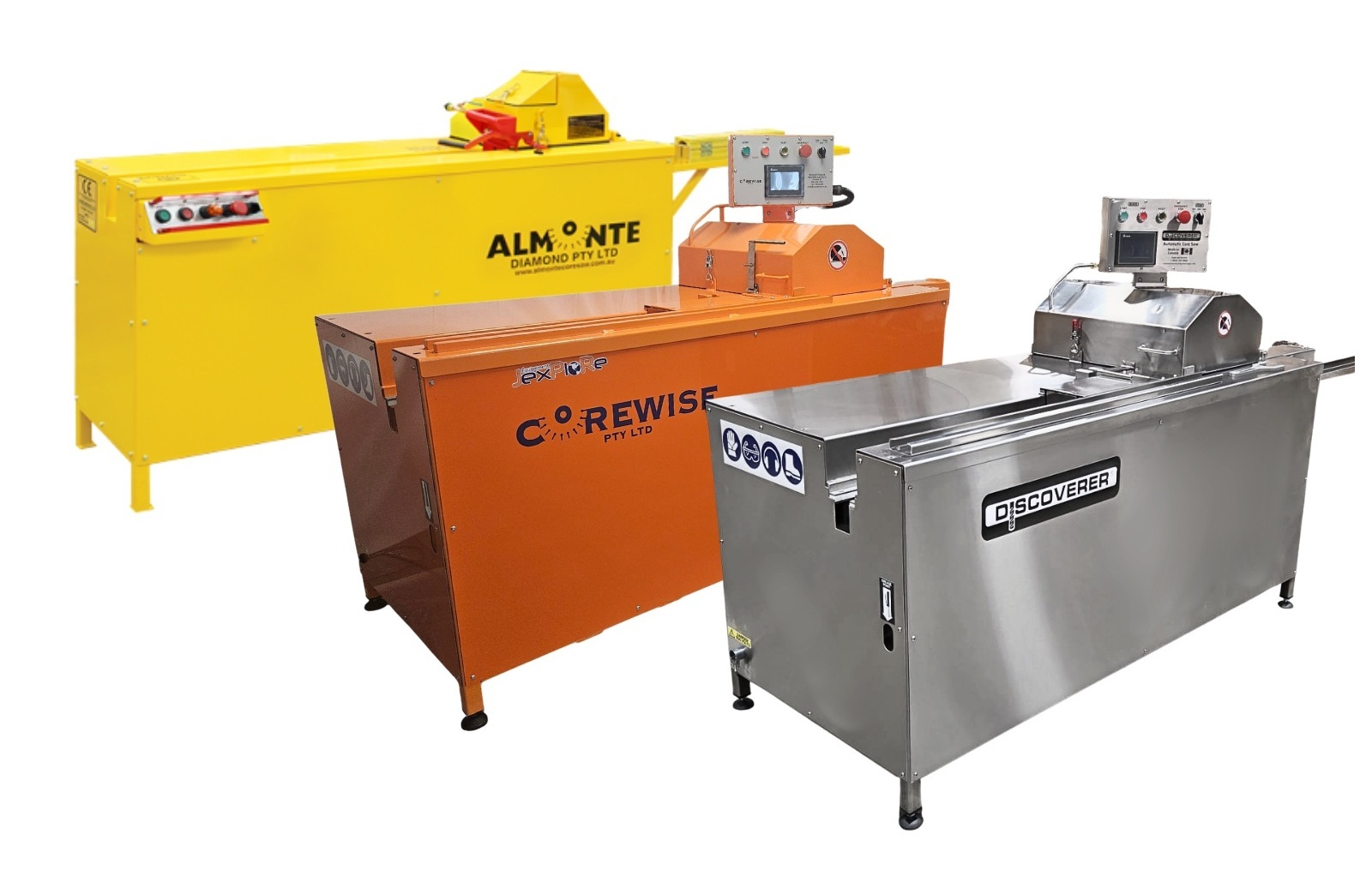
If you're running an exploration program and looking to purchase an automatic core saw, you will quickly notice three commonly discussed machines in the market:
-
Almonte Automatic Core Cutter
-
Corewise Automatic Core Saw
-
Discoverer Automatic Core Saw
At first glance these machines appear very similar. Many geologists, field techs and core yard supervisors ask the same question:
“They all look almost the same — what’s actually different?”
This guide outlines key considerations when comparing automatic core saws available in the market. These automatic core saws reflect different design approaches that have developed over time based on operational requirements and engineering preferences.
The goal of this article is not to tell you which saw to buy.
Instead, it is to help you understand the differences so you can determine which machine best suits your site conditions and operating priorities.
In this guide we compare the machines across the factors that exploration teams usually care about most:
-
Control systems
-
Feed chain design
-
Blade drive systems
-
Maintenance requirements
-
Dust and safety considerations
-
Construction materials and corrosion resistance
-
Warranty and support
These factors are considered in a general context to help understand design differences between Automatic Core Saws, rather than as a direct ranking of one machine over another.
Evolution of Automatic Core Saws
The automatic core saw was first introduced in Perth, Western Australia in 1993.
Frank, the inventor of the Almonte Automatic Core Saw, built the first commercially successful unit and named it after his two children – Al and Montana.
The machine gained traction across exploration programs globally and became widely recognised as an early benchmark in automated core cutting.
Due to the functional requirements of automated core cutting, automatic core saws across the industry can often appear visually similar in layout and configuration.
How Automatic Core Saw Design Have Developed
Automatic core saw designs have evolved over time, with different manufacturers adopting varying approaches to automation, safety features, and mechanical design.These approaches are typically influenced by operational requirements, as well as the preferred balance between simplicity, durability, and automation.
Control Panel Design
Control systems have evolved across the generations of automatic core saws.
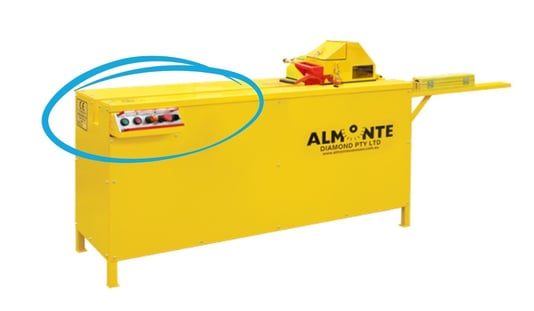
Earlier machines typically used external push buttons mounted on the machine body. Because these buttons are often located in high activity areas around the saw, operators occasionally report accidental damage caused by core boxes/trays, tools or general movement around the machine.
More recent machines such as the Discoverer Automatic Saw and Corewise Automatic Core Saw incorporate LCD control panels positioned higher on the unit, away from hazards and wet areas. These panels allow operators to:
-
Adjust feed speed
-
Adjust motor speed
-
Monitor machine status.
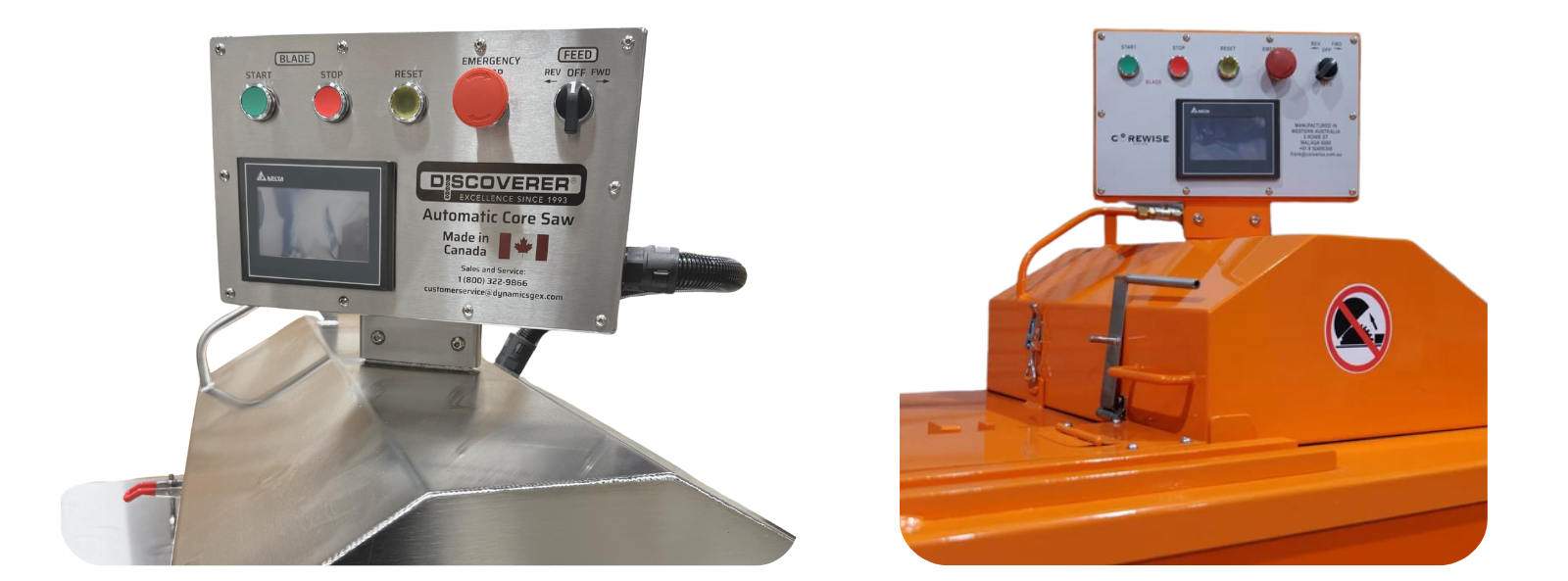
For exploration teams cutting different rock types, the ability to adjust settings easily can improve cutting efficiency.
Feed Chain System
The method used to feed core boats (also known as core guides, holders or carriers) through the blade is another major design difference.
Rear Pusher
-
Pushers spaced along the chain engage the core boat and move it through the blade once contact is made. The Almonte saw uses this system.
Continuous Chain System
-
Uses a continuous chain system where the core boat locks directly into the chain. This allows operators to place core boats onto the chain at almost any point rather than waiting for the next 'pusher'. The Discoverer and Corewise saw's utilize this system.
-
The new chain design for the latest Discoverer Auto Saw also enables the operator to load core from the end of the saw, reducing the risk of pinch points associated with top loading.
Some operators prefer the continuous chain system because it can improve workflow efficiency during high volume cutting.
Blade Drive Systems
Blade drive systems also differ between the machines.
Almonte uses a belt and pulley drive system to transfer power from the motor to the blade, as shown in the picture below. 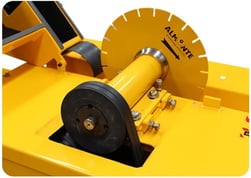
The Discoverer Automatic Saw (as shown in picture below) and the Corewise saw uses a direct drive motor, where the motor connects directly to the blade shaft.
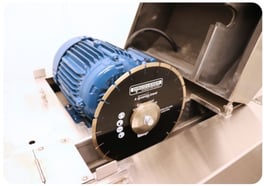
Direct drive systems are often associated with:
-
Reduced power loss
-
Fewer moving components
-
Less maintenance requirements.
Maintenance Considerations
Maintenance ease and accessibility can influence downtime on exploration programs.
Some operations prefer machines that allow trained site personnel to perform routine servicing without needing to send the unit back to the manufacturer.
Features such as the ones below can make routine maintenance easier and help reduce operational interruptions:
-
External grease points
-
Accessible chain drives
-
Simplified component replacement.
Be sure to check with the manufacturer or supplier of the saw you are looking at on what maintenance features are included.
Construction and Corrosion Resistance
Core cutting environments can be highly corrosive due to:
-
Constant water exposure
-
Saline groundwater
-
Sulphide minerals such as pyrite
-
Mineral salts from evaporative environments.
Corewise and Almonte core saws are manufactured from powder-coated steel.
Over time, some operations report corrosion forming on structural components in aggressive environments.
The Discoverer Automatic Core Saw incorporates stainless steel construction, which is commonly selected in environments where resistance to corrosion and long-term durability are important considerations. 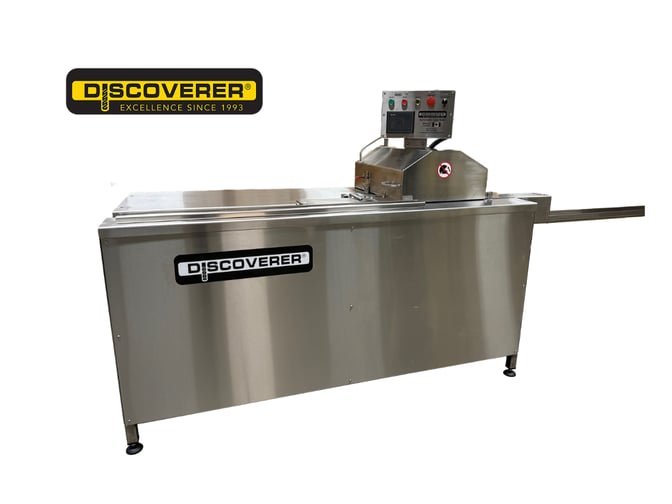
The Silica Dust Danger
This is not a doomsday story — it is a current reality affecting industries right now.
We have already seen this play out in the engineered stone and kitchen benchtop industry, where silica dust enforcement and risk management have become a major focus.
It is only a matter of time before similar enforcement increases around core cutting processes, and in some regions of the world this is already happening.
Globally, workplace health and safety frameworks are increasingly aligning around the 8-hour Workplace Exposure Standard (WES) for respirable crystalline silica (RCS) of 0.05 mg/m³, which must not be exceeded.
Interested to read more on this?
- Occupational Safety & Health Administration (US) link here.
- Canadian Centre for Occupational Health & Safety link here.
-
Safe Work Australia link here.
Across WHS mining and industrial frameworks, the hierarchy of controls is generally:
-
Eliminate
- Substitute
- Engineering Controls (isolate or capture at source)
- Administrative Controls
- PPE
Most people tend to start with the easiest step — wearing safety glasses and a mask — but that only addresses Level 5 of the hierarchy.
Unfortunately, because core samples must still be cut, elimination and substitution are not practical options. This means the most effective approach is to focus on Level 3 Engineering Controls.
Current Developments in Silica Control
As a result, many exploration teams are now looking for practical ways to reduce silica exposure at the source — particularly at the point where core exits the saw.
Discoverer is currently developing a SilicaControl range of upgrades designed to improve dust capture across automatic core saw operations, including retrofit solutions for existing machines. Early-stage field trials using a SilicaControl chamber enhancement paired with a wet-dry HEPA vacuum system have shown promising results.
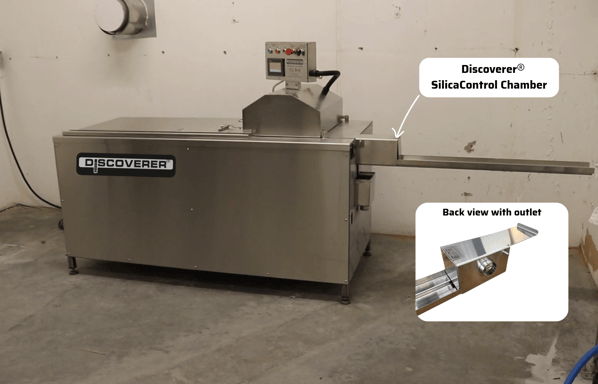
Further development is underway on the SilicaControl Water Processing System, with certified testing currently being conducted on mine sites in Australia and North America. This system is expected to be released in the coming months.
From initial site testing:
“The results show a significant reduction in the dust that we had previously identified as escaping from the rear of the saw with core carriage exit. We will repeat testing a few times to confirm but are quite pleased with these first test results.”
However, for many operations this issue goes beyond simple regulatory compliance. Mining companies and exploration firms are increasingly concerned about:
- Future litigation
- Industrial manslaughter laws
- Long-latency disease claims
- Directors’ personal liability
By addressing silica exposure at the engineering control level, this approach can help provide reduced operational liability, reduced long-term compensation exposure and a defensible engineering control for workplace safety programs.
Warranty Comparison
Warranty periods can vary between manufacturers.
-
Corewise – 12 months, covers the motor and gear box only
-
Discoverer – 24 months, covers the whole saw and all components
Buyers should review detailed warranty terms directly with each manufacturer.
Pros and Cons of Each Saw
Almonte Automatic Core Saw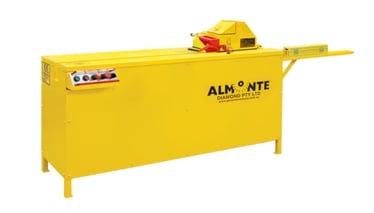
Pros
-
Proven long‑term design
-
Widely recognised across the industry
-
Simple mechanical system
Cons
-
Belt drive requires maintenance
-
Rear‑pusher feed design
-
Powder‑coated steel construction
Corewise Automatic Core Saw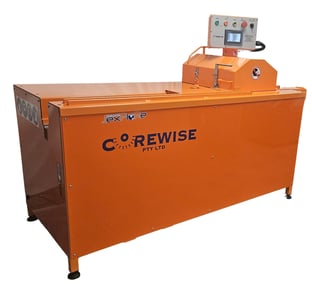
Pros
-
Continuous feed chain
-
Direct drive motor
-
Updated control systems
Cons
-
Powder‑coated steel construction
-
Standard dust suppression
Discoverer Automatic Core Saw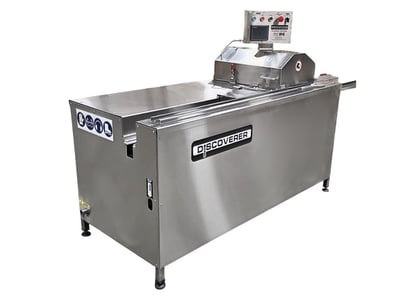
Pros
-
Stainless steel construction
-
Engineered silica dust control
-
Extended warranty
Cons
-
Higher upfront investment
-
Newer machine compared with earlier designs
Which Saw Is Best for Different Situations
Best for budget focused exploration programs
-
Lower upfront cost machines may be attractive for short-term programs.
Best for high volume core cutting
-
Continuous chain systems may improve efficiency when processing large volumes of core.
Best for corrosive environments
-
Stainless construction will offer improved longevity in aggressive environments.
Best for operations prioritising silica dust management
-
Machines with engineered dust capture systems help reduce exposure risks.
Global Support
Access to spare parts and service support can vary depending on region.
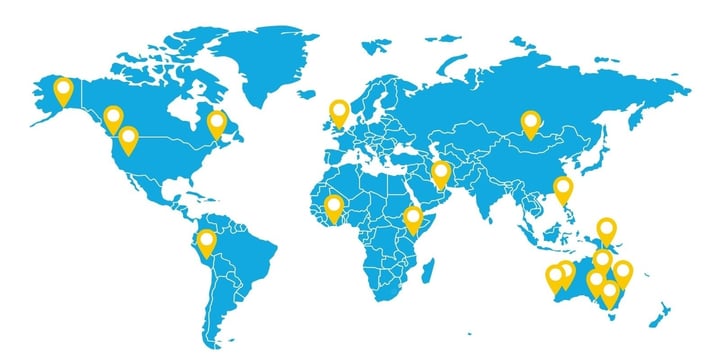
Discoverer Core Saws are supplied through Dynamics’ international distribution network across major mining regions including:
-
Australia
-
North America
-
South America
-
Africa
-
Europe
-
Middle East
-
Asia
The map below shows the Discoverer sales and support locations:
When evaluating equipment, it is always advisable to confirm local support and spare parts availability.
Conclusion
Each of these machines has been used successfully on exploration programs around the world.
Almonte represents the original automatic core saw design, Corewise introduced second generation improvements, and Discoverer focuses on newer developments around corrosion resistance and Silica dust control.
The best option ultimately depends on the priorities of your operation, including site conditions, safety requirements, maintenance preferences and budget.
By understanding the differences between the machines, exploration teams can make a more informed purchasing decision.
Frequently Asked Questions
What is an automatic core saw?
-
An automatic core saw is a machine used in exploration programs to cut drill core samples quickly, consistently and safely.
How does an automatic core saw work?
-
The machine feeds core boats/holders/guides/carriers through a rotating diamond blade while water suppresses dust and cools the blade.
What is the difference between belt drive and direct drive core saws?
-
Belt drive systems transfer power through belts and pulleys, while direct drive systems connect the motor directly to the blade shaft.
How do you control silica dust when cutting drill core?
-
Dust is typically controlled through water suppression, ventilation systems and increasingly through engineered dust extraction systems.
Dynamics G‑Ex and its Discoverer products are independent of Corewise and Almonte. Any references to third-party Automatic Core Saws are for general informational purposes only and do not imply any affiliation or endorsement.
Article last updated: 14 July 2026
The information provided in this article reflects the information and data available at the date the article was published. Please be aware that the information and data may change over time and since the date of publication.
Spencer Dormer
My goal is to empower Geologists & Field Techs to make more informed decisions through providing unbiased and insightful thought leadership for the industry worldwide.